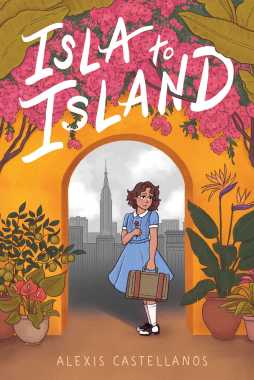
 This largely wordless graphic novel tells the difficult story of Marisol, a young girl who journeyed from Cuba to New York when Castro came to power. Marisol’s story is representative of what many children experienced during Operation Peter Pan. This program helped parents, who were concerned about the unrest in Cuba, find a safe haven for their children in American foster homes.
The story opens in Marisol’s loving home in Cuba, where she and her parents enjoy life. Her days are filled with enjoying nature, reading, attending school and indulging in her new hobby — pressing flowers she finds on her walks. When Castro takes over in 1961, things begin to change. Her walks with her parents are interrupted by gunfire. School is taught by revolutionaries, with guards stationed outside the building. Food becomes scarce. As the violence gets closer to their home, her parents make a difficult decision. They put Marisol on a plane to Florida. She is alone and doesn’t speak any English. From there she goes to New York to live with a foster family. Marisol’s adjustment is difficult – she has to endure the freezing cold weather and a school where she is bullied. Because of the language barrier, she finds herself isolated. Her hard days at school begin to get better once she discovers the library. Her spirits are lifted by beautiful botanical books that are filled with pictures of the plants she loves. Her foster family understands what this means to her. They support her love of plants and books and take steps to make her feel even more at home. When spring comes, the world blossoms and so does Marisol.
The use of color in this graphic novel is extraordinary; it is as much a character as the people. Marisol’s early days in Cuba with her family are joyfully, brightly colored. Varying panel structures give the story an easy flow. Slowly, as the political situation in Cuba changes, color is leached out of the art. Her arrival and early days in New York are all in grayscale. A flower she brought from home provides the only spot of color. Color very slowly and gradually starts to reenter the story when Marisol discovers the library. Books provide the accents of brightness in the rest of her grayscale day to day. As spring and Marisol blossom, her world is filled with color again.
The issues facing immigrant children are relevant today as young people arrive at US borders, some unaccompanied by parents, but others separated from them. While many children ended up with relatives or with good foster families during Operation Peter Pan, many did not. Instead they landed in abusive homes or in juvenile detention centers. Once again, children are being thrown into harsh conditions as a result of their families taking risks to try and provide them with a better life.
Find Isla to Island at your local bookstore.
 Books I Can't Shut Up About